How to Choose the Best Countries for Digital Nomad Taxes in 2026

Not sure where to start? Our free Relocation Wizard matches you to your ideal country in minutes.
Key Takeaways
- Tax policies in 2026 are pivotal for digital nomads choosing a destination—look for flat tax rates, exemptions, and residency incentives.
- Countries like Portugal, Spain, and the United Arab Emirates offer revamped visas and attractive tax regimes tailored for remote workers.
- Residency rules, income thresholds, and the duration of tax benefits vary significantly and directly impact sustainable long-term planning.
- Emerging markets such as Costa Rica and Mexico balance cost advantages with evolving visa options, while Europe and Asia focus on quality healthcare and investor visas.
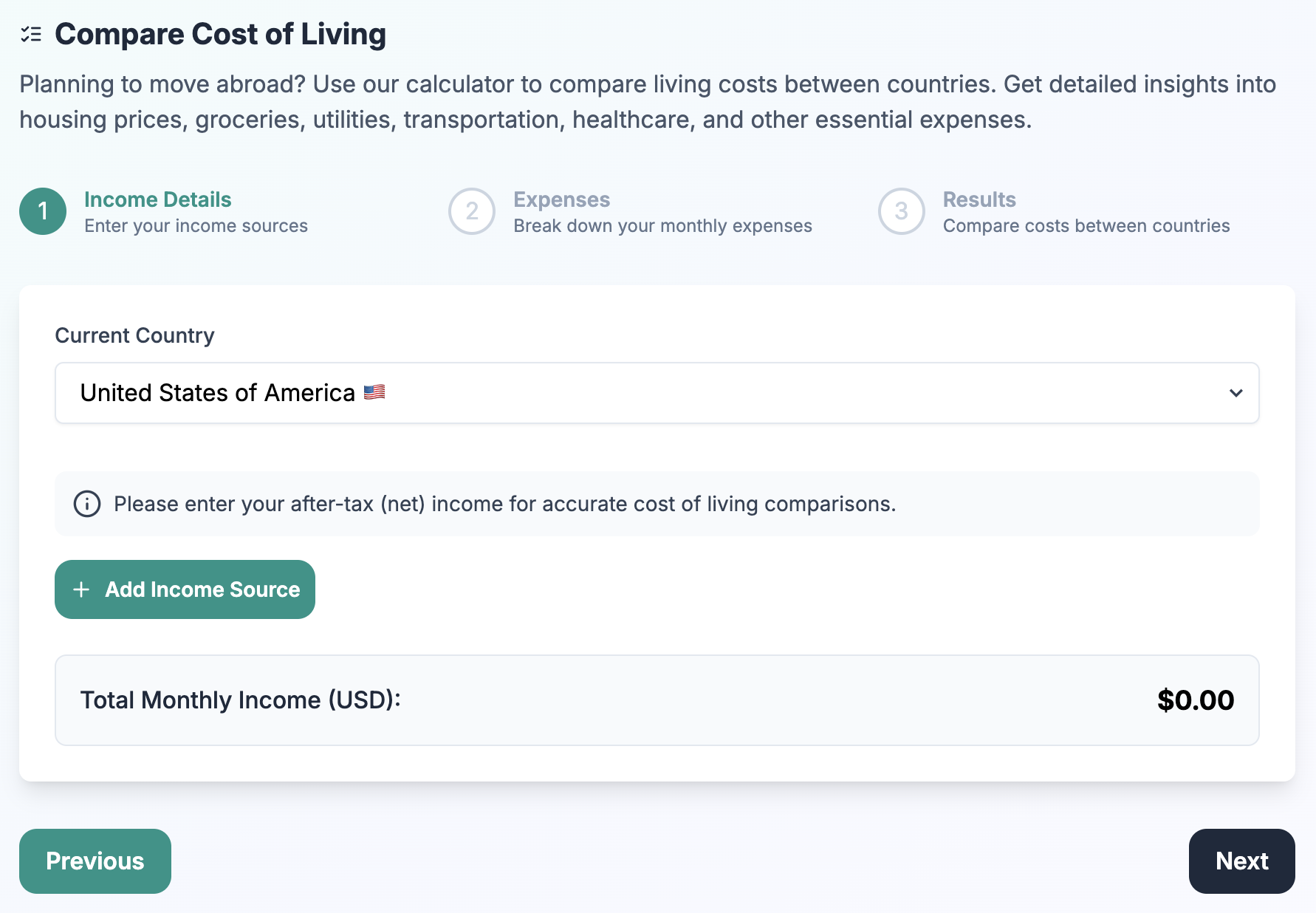
- Using tax-friendly visa programmes in conjunction with cost-of-living considerations can optimize your remote work lifestyle—start by exploring our Relocation Wizard and cost-of-living calculator.
Understanding Digital Nomad Taxes 2026: Why It Matters More Than Ever
With remote work normalised globally, 2026 marks a turning point where tax considerations are becoming a strategic element in digital nomad relocation decisions. Digital nomad taxes 2026 is not just about avoiding double taxation—it's about leveraging specific country regimes that offer flat tax rates, exemptions on foreign income, or attractive residency-based incentives.
Gone are the days when location-choice was made purely on lifestyle or connectivity. Today, governments are revising their visa and tax frameworks to attract or regulate remote workers, reflecting shifting economic priorities and international tax transparency rules. Understanding the interplay between income thresholds, residency criteria, and tax duration benefits can save digital nomads thousands annually and enable sustainable living abroad.
Quick Tip: Before committing, calculate your projected global income and evaluate which countries’ tax regimes offer the best net benefit using trusted expat tax comparison tools.
Criteria to Evaluate the Best Countries for Digital Nomad Taxes in 2026
When researching digital nomad taxes 2026, it helps to establish a checklist of key factors:
- Income Thresholds: Minimum earnings required to qualify for visas or tax incentives.
- Flat Tax Rates & Exemptions: Presence of preferential tax rates or exclusions, especially on foreign-sourced income.
- Duration of Tax Benefits: How long apply the preferential rates—short-term relief versus multi-year advantages.
- Residency Rules: Time required to establish tax residency and obligations, including physical presence and reporting.
- Transparency & Compliance: Impact of global financial reporting standards (OECD/G20 initiatives) on ease of tax planning.
- Healthcare and Social Benefits: Access to public or private healthcare often linked to residency status.
- Cost Of Living: Key for long-term affordability alongside tax benefits (use our cost-of-living calculator).
Portugal: A Tax Haven with Flexible Digital Nomad Visa Options

Portugal continues to solidify its position as a top European hotspot for digital nomads, largely due to its 2025 update to the Digital Nomad Visa. In 2026, this visa offers a one-year residency permit, extendable up to five years, lowering the minimum income requirement to €2,500 per month from €3,000. This reduction expands eligibility beyond high-tech sectors, appealing to creatives and freelancers alike.
Tax Incentives
While residing in Portugal, many nomads take advantage of the famed Non-Habitual Resident (NHR) scheme, which—although slightly modified for arrivals post-2026—still allows preferential tax treatment such as a flat 10% rate on qualifying foreign pension income and exemptions on some foreign-sourced income for a decade.
Quick Tip: Arrive before 2027 to lock in the existing NHR benefits on foreign pensions and income as the new policies will tighten eligibility around these exemptions.
Portugal’s tax system also encourages longer stays due to its residency rules—spending more than 183 days annually qualifies you as a tax resident, benefiting from these flat tax rates. Healthcare access through the public system enhances its appeal for retirees and longer-term nomads.
Spain: Competitive Tax Rates and Startup-Focused Digital Nomad Visa

Spain’s evolving tax landscape is particularly appealing for digital nomads looking to scale business or optimize tax payments. The country revamped its Non-Lucrative Visa and introduced the targeted Spain Digital Nomad Visa under the 2025 Startup Act.
- Requirement: Minimum monthly income of €2,800.
- Tax incentive: Flat 24% tax on income up to €600,000 for the first five years.
- Benefit: Streamlined application process and elimination of previous bureaucracy.
Spain’s approach aims to attract startup founders and remote professionals, balancing a reasonably low income threshold with a competitive flat tax rate attractive to medium-high earners.
Residency and Duration
The visa grants one year initially, extendable up to five years, aligning with tax incentive duration. This encourages nomads to plan for intermediate to long-term relocation, generating payroll or investment contributions while enjoying Spain's vibrant culture and affordable healthcare.
United Arab Emirates: Tax-Free Luxury with Expanded Residency Options

The UAE’s allure rests on its zero personal income tax policy combined with ultra-modern infrastructure and increasing accessibility for digital nomads and investors.
Golden Visa Expansion in 2026
In 2026, the Golden Visa programme cut the property purchase threshold from AED 1 million to AED 750,000 (USD 205,000), making residency attainable to a broader investor pool. Alongside, Dubai’s Virtual Working Programme offers a one-year remote work licence at AED 7,500 (USD 2,000), including health insurance.
Why UAE Suits High-Income Digital Nomads
- Zero tax on global income.
- Long-term (10-year) residency options via Golden Visa.
- Premium healthcare options.
- High living expenses balanced by luxury and safety.
Quick Tip: While tax-free, the UAE now adheres to OECD financial transparency rules, so keep compliant with global income reporting to avoid future complications.
Canada and New Zealand: Quality of Life Meets Emerging Remote Work Visas

While Australia tightened visa entry requirements in 2026, Canada and New Zealand remain magnets for remote workers seeking stable tax environments combined with excellent quality of life and social benefits.
Canada’s Digital Nomad SR&ED Visa Pilot
Toronto launched a new one-year digital nomad residency pilot tied to the Scientific Research and Experimental Development (SR&ED) tax incentive program.
- Cost: CAD 1,200
- Benefits: Residency plus subsidized coworking spaces.
- Income: No strict minimum income but aligned with tech/healthcare skill streams.
Express Entry improvements ensure faster PR processing (around 4 months for qualifying applicants), making Canada a practical stepping stone for longer-term settlement and tax planning.
New Zealand Remains an Attractive Option

New Zealand’s relatively simple residency pathways and emphasis on safety and environment continue to draw nomads, despite its recent cautious immigration stance.
Emerging Destinations: Costa Rica and Mexico Balancing Taxes and Livability

Countries in Latin America stand out by combining lower living costs with progressively competitive digital nomad visas.
Costa Rica’s Updated Rentista Visa

- Duration: 2 years residency.
- Income proof: Increased to USD 3,000/month.
- Benefit: Access to public healthcare via Caja Costarricense de Seguro Social (CCSS).
- Tax: Territorial system taxing only local-sourced income, often favorable to nomads.
Mexico’s Flexible Temporary Resident Visa
- Duration: 1–4 years.
- Cost of living: Relatively low; settlement increasingly popular in safe cities like Mérida.
- Tax regime: Territorial taxation primarily on Mexican-source income.
- Currency advantage: Peso depreciation improves USD buying power.
Nomads here enjoy a combination of affordable healthcare, community support, and low-cost living, though tax planning should consider potential local business activities or rental incomes.
Digital Nomad Tax Trends in Europe: Eastern Expansion and e-Residency Innovations
Europe remains a digital nomad magnet, but trends show diversification from traditional capitals toward Eastern Europe and smaller urban centres.
Estonia’s e-Residency Plus and Tax-Friendly Framework

Estonia’s e-Residency has evolved with a digital nomad extension costing about €150/year, enabling remote professionals—especially fintech and blockchain workers—to register and manage EU-based businesses virtually while benefiting from Estonia’s flat 20% corporate tax paid only on distributed profits.
Poland and Eastern Europe: Cost and Tax Incentives

Countries like Poland are growing attractive for budget-conscious nomads, with evolving tax treaties and dual residency agreements easing compliance. While some southern Eurozone countries face inflation around 5%, Poland offers stability with competitive income tax brackets (~17–32%).
Asia’s Selective Approach: Japan and Singapore Target the Affluent

Asian countries in 2026 focus on attracting wealthy investors and high-skilled workers with distinctive tax and residency programs.
Japan’s Special Long-Term Resident Visa for 55+ Digital Nomads

- Income requirement: ¥350,000/month (~USD 2,550).
- Benefits: Access to National Health Insurance with subsidised premiums (~¥20,000/month).
- Duration: Extended visa options supporting longer stays.
Japan combines high living costs with excellent healthcare and safety, making it ideal for older digital nomads prioritizing healthcare quality.
Singapore’s Global Investor Program (GIP)
- Minimum investment: SGD 2.5 million (~USD 1.85 million).
- Benefits: PR with comprehensive private healthcare and education access.
- Target audience: Ultra-wealthy remote workers, mainly from Southeast Asia and China.
Though pricey, Singapore offers unparalleled infrastructure and stability with zero capital gains tax but high personal income taxes on earned income.
Evolving Tax Transparency and Compliance: What Digital Nomads Need to Know
International tax regulation is tightening, especially following OECD’s global minimum tax framework. Digital nomads should be aware:
- Reporting rules are stricter even in tax havens like the UAE.
- Some countries now require proof of foreign tax payments or limit prior exemptions (e.g., Portugal’s NHR pension changes from 2027).
- Digital nomads must maintain clear records of physical presence, business activity, and income sources to avoid unexpected liabilities.
Quick Tip: Consult an international tax advisor and stay updated on changing foreign reporting requirements to maintain compliance across jurisdictions.
Secondary Cities and Quality of Life: A New Trend Impacting Taxes and Residency
Rising living costs and congestion in major hubs are shifting expat demand toward secondary cities, impacting tax planning:
- In the UK, cities like Edinburgh, Manchester, and others benefit from lower housing costs and visa options such as the Homemade Remote Worker Visa (2-year residence, no minimum income requirement).
- Scandinavian secondary cities such as Bergen (Norway) and Tampere (Finland) attract nomads with strong governance, though affordability remains a concern.
- This trend allows digital nomads to maintain residency status, meet physical presence requirements, and enjoy balanced lifestyles at lower cost.
Digital Nomad Taxes 2026: Comparison Table of Key Visa and Tax Benefits
| Country | Minimum Income / Investment | Tax Regime / Rate | Visa Duration | Key Benefits |
|---|---|---|---|---|
| Portugal | €2,500/month | Flat 10% NHR (foreign pension) | 1 up to 5 years | Low income threshold, healthcare access |
| Spain | €2,800/month | 24% flat (up to €600K) | 1 up to 5 years | Startup-friendly, streamlined visa |
| United Arab Emirates | AED 7,500 license fee (~USD 2K) | 0% personal income tax | 1 year (virtual working) | No income tax, luxury lifestyle, 10-year Golden Visa |
| Canada | Pilot CAD 1,200 fee | Regular tax rates apply | 1 year digital nomad visa | Fast PR routes, tech friendly |
| Costa Rica | USD 3,000/month | Territorial tax system | 2 years Rentista visa | Public healthcare access, affordable living |
| Mexico | No explicit minimum | Territorial taxation | 1–4 years Temporary Resident Visa | Low cost of living, flexible duration |
| Estonia | €150/year e-Residency fee | 20% corporate tax on distributed profits | Digital nomad e-Residency | Business-friendly, EU base |
Frequently Asked Questions
What are the top tax-friendly countries for digital nomads in 2026?
Countries like Portugal, Spain, and the tax-free United Arab Emirates lead the list. They offer digital nomad visas with flat tax rates or exemptions that favor remote workers. Emerging destinations in Latin America and Eastern Europe also offer attractive incentives for particular income levels.
How do income thresholds affect digital nomad visa eligibility?
Income thresholds determine the minimum monthly earnings you must prove to qualify for visas or tax benefits. For example, Portugal requires about €2,500/month on its digital nomad visa, while Spain asks for €2,800/month. Meeting these thresholds is crucial to maintaining residency and tax advantages.
Are there new tax transparency rules impacting digital nomads?
Yes, global efforts led by the OECD have increased transparency, requiring tax data sharing between countries. Even zero-tax jurisdictions like the UAE now enforce stricter compliance, so digital nomads must carefully maintain tax records and filings to avoid penalties.
How can I maximize tax benefits while planning long-term digital nomadism?
Consider visas that offer multi-year residency with flat tax rates, research the length of preferential tax treatment, and combine this with countries that have cost-effective living and healthcare. Tools like our Relocation Wizard can help identify destinations matching your income, lifestyle, and tax goals.
Final Thoughts
Choosing the best countries for digital nomad taxes in 2026 requires balancing evolving visa regimes, tax laws, cost-of-living, and healthcare considerations. Countries like Portugal, Spain, and the United Arab Emirates stand out for their optimized tax and residency programs, while emerging markets offer fresh, affordable alternatives.
To make the smartest relocation decision, use our Relocation Wizard to narrow down options based on your personal and financial profile. Complement this with the cost-of-living calculator to align your budget and lifestyle expectations. Strategic planning now will ensure you enjoy your 2026 digital nomad journey tax-efficiently and sustainably.